
AKJJAK
CHARACTERISTICS:
Type: CITY
Population: 21,000
Affiliation: Unionist (KUP)
Primary Export: ARCHEOLOGY / RELIGIOUS PILGRIMAGE
DESCRIPTION:
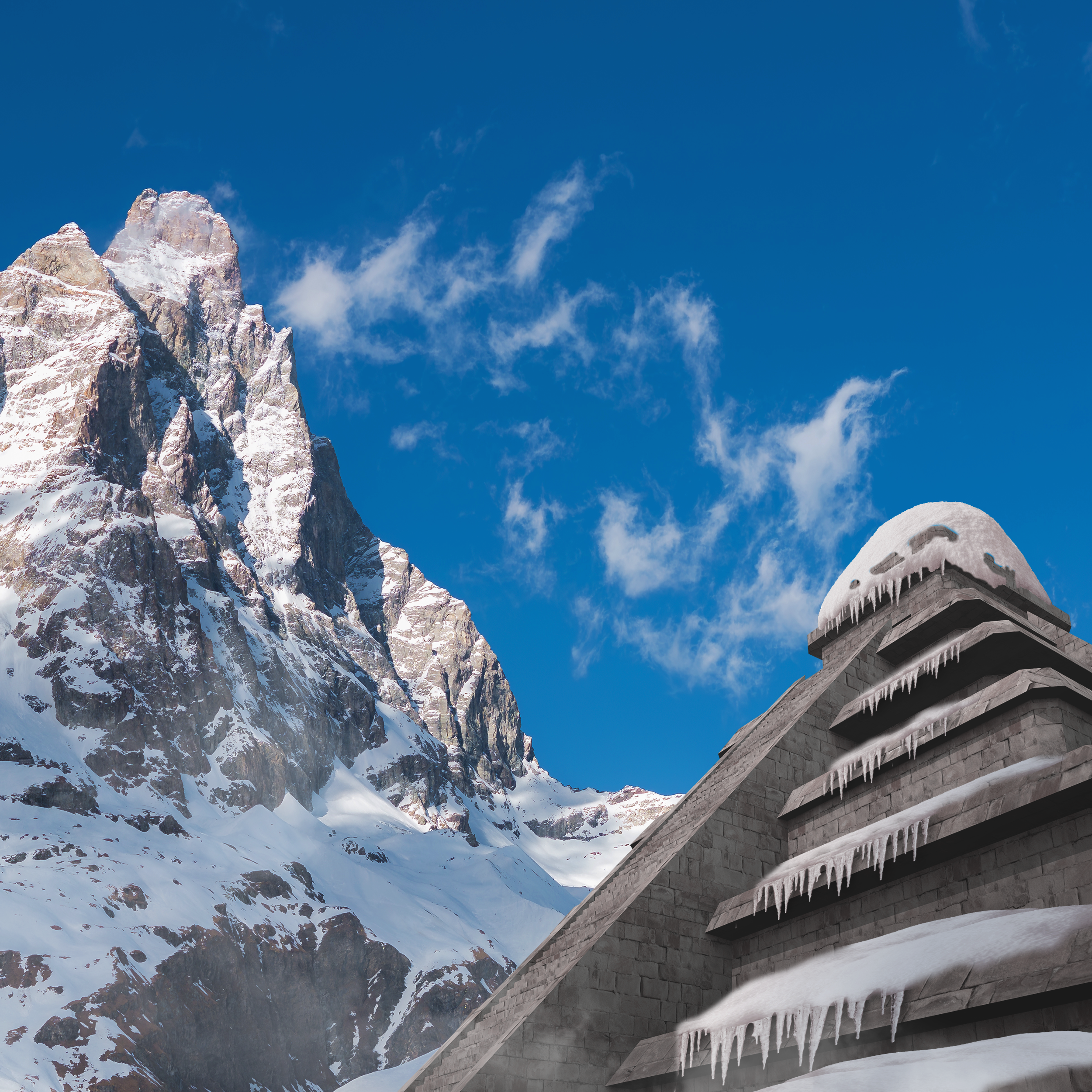
The largest Kynosaur settlement in Logobadi, Akjjak (Ak-yāk) is situated high in the Pilik mountains. With a small rural population and treacherous high altitude terrain, Akjjak remains frozen in time, with infrastructure and traditions that have remained unchanged for centuries. The ancient temples that comprise the majority of Akjjak’s development are truly ancient — MORC archeologists predict the original Kynosaur culture that constructed Akjjak existed thousands of years before Human contact.
The Kynosaur people who now occupy Akjjak are called the Jjaki. It is unknown if the Jjaki are descendants of the original culture who constructed the ancient temples or not. Regardless, the religion for which the temples where constructed has long been forgotten.
Before the formation of the KUP, the Jjaki were subjects of the Logobadi Imperial Dynasty (LID). Seeing the KUP’s resistance to the LID, the Jjaki were inspired to advocate for their own independence. In 3099, the Jjaki Liberation Alliance launched a campaign of civil disobedience in protest to the Kotensurai occupation. Kotensurai forces responded with violent crackdowns and increased military presence provided by the NTF. The then fledgling KUP saw the rising tension in Akjjak and decided to send critical support to aid the Jjaki in their fight for liberty. KUP support included shipments of medical aid and food escorted by a battalion of KLA (Kørtisian Liberation Army) fighters. The arrival of the KLA marked the first military action in KUP history, the Battle of Western Pilik. The battle was fought in four days, resulting in a resounding KUP victory and the complete withdraw of LID and NTF forces from Akjjak. It is believed the NTF’s defeat in the Battle of Western Pilik directly influenced the creation of the E.I.A.
After the Battle of Western Pilik, the Jjaki returned to the homes and rebuilt Akjjak with the assistance of the KUP and the Sovkós Union. During the reconstruction effort, a group of aid workers and followers of Zen found great harmony in the massive ancient Kynosaur structures of Akjjak. The isolated mountain city quickly became a landmark and place of pilgrimage for the Zen. In the years following, much of Deadstar’s Zen practitioners have migrated to Akjjak where they have made significant efforts to preserve the history of the ancient people who constructed the city.